

National Highway Network flood resilience study
The Northern Territory Government, with support of the Australian Government, is planning for improved resilience, connectivity and efficiency of the Northern Territory National Highway network.
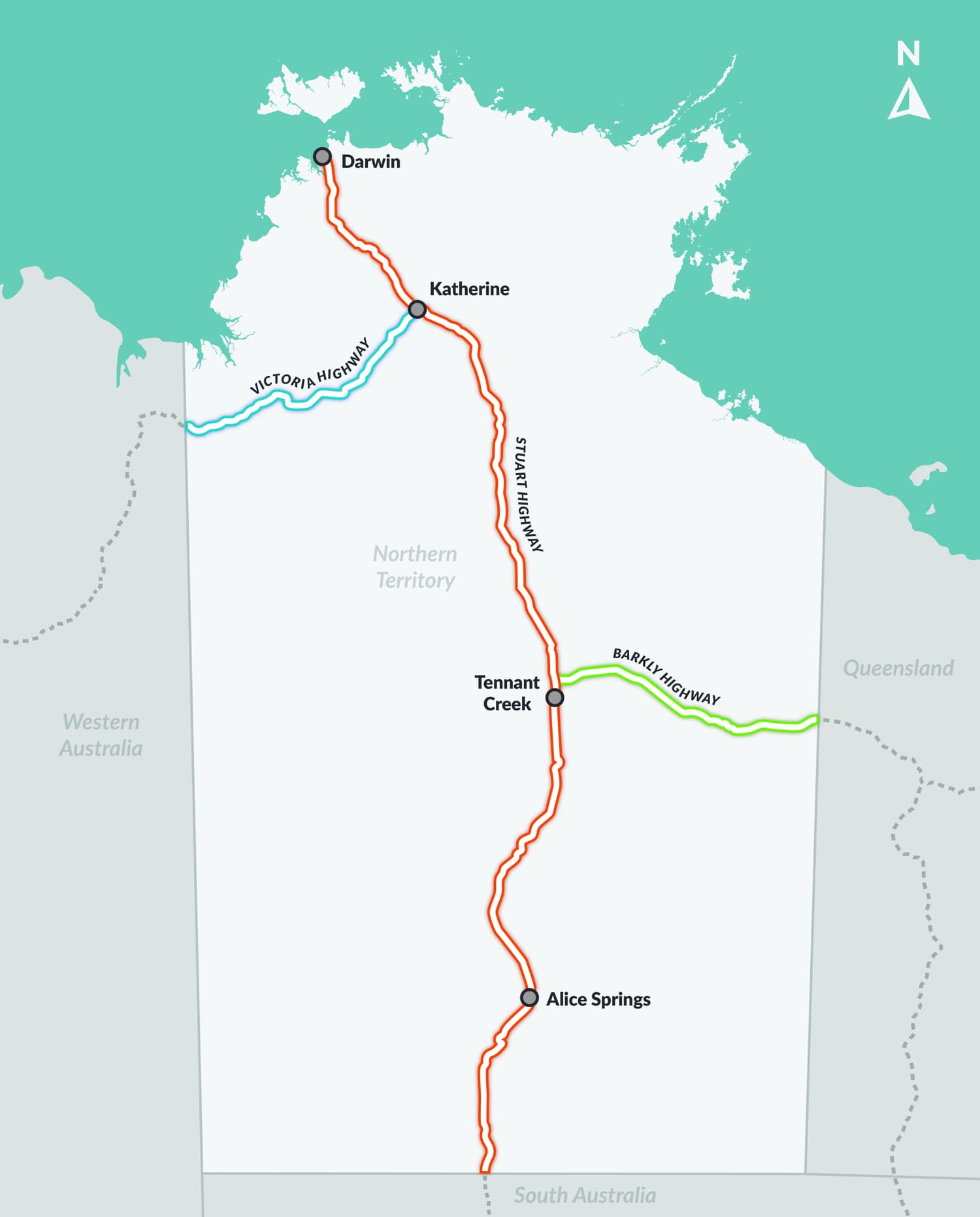
The National Highways, consisting of the Stuart Highway, Victoria Highway and Barkly Highway, connect major population centres and remote communities with each other and with neighbouring states.
Ensuring the national highways can withstand flood events is critical to maintaining transportation networks, minimising economic losses, supporting emergency services and ensuring public safety.
WRM Water and Environment has been engaged to undertake a National Highway network flood resilience study. The study will identify vulnerabilities and prepare strategies to enhance the disaster resilience of the Northern Territory National Highway network. The project will deliver options to upgrade the network to improve flood immunity and climate change resilience.
Map
Background
The Northern Territory National Highways are located across a number of creek and river catchments, exposing the highways to flooding from the waterway crossings.
The highways have the following number of stream crossings:
- Stuart Highway 376
- Victoria Highway 144
- Barkly Highway 47
Historic data shows the following highway closures have occurred due to flooding:
- October 2005 to March 2024 - Stuart Highway was closed 100 times, with closures lasting approximately 35 hours on average.
- January 2014 to March 2024 - Victoria Highway was closed 71 times, with closures lasting approximately 38.5 hours on average.
- October 2013 to March 2024 - Barkly Highway was closed 14 times, with closures lasting approximately 42 hours on average.
In addition to road closures, road surfaces are damaged after flood events, resulting in poor and unsafe driving conditions. Subsequent road maintenance results in further delays to traffic.
Benefits
By making roads more resistant to flooding, communities can better withstand disaster events, minimising damage and disruption to essential services and transportation.
The study will aim to achieve the following benefits:
- Enhanced flood resilience and adaptation to climate change
- improved road safety and reduced risk
- minimise damage and economic impacts of flooding events
- maintain access to communities and services during flood events
- improved network efficiency, connectivity and reliability.
Status
The National Highway network flood resilience study commenced in June 2025 and is currently expected to be completed by mid-2027. The study will include consultation with local authorities, environmental agencies and industry experts.
Next steps
The final study report(s) will provide a list of prioritised upgrade options across the National Highway network. Based on the identified priority sections, the department will seek funding under future budgetary cycles before progressing each priority section to next phases of design and final delivery. The timeline to deliver various upgrade sections is currently unknown.
Contact
Email: transport.planning@nt.gov.au
Phone: 08 8924 7118
Give feedback about this page.
Share this page:
URL copied!